From Zero to Confident: My Journey into Clinical MassageA Beginner’s Review of the Deep Tissue Massage Course at RSM International Academy
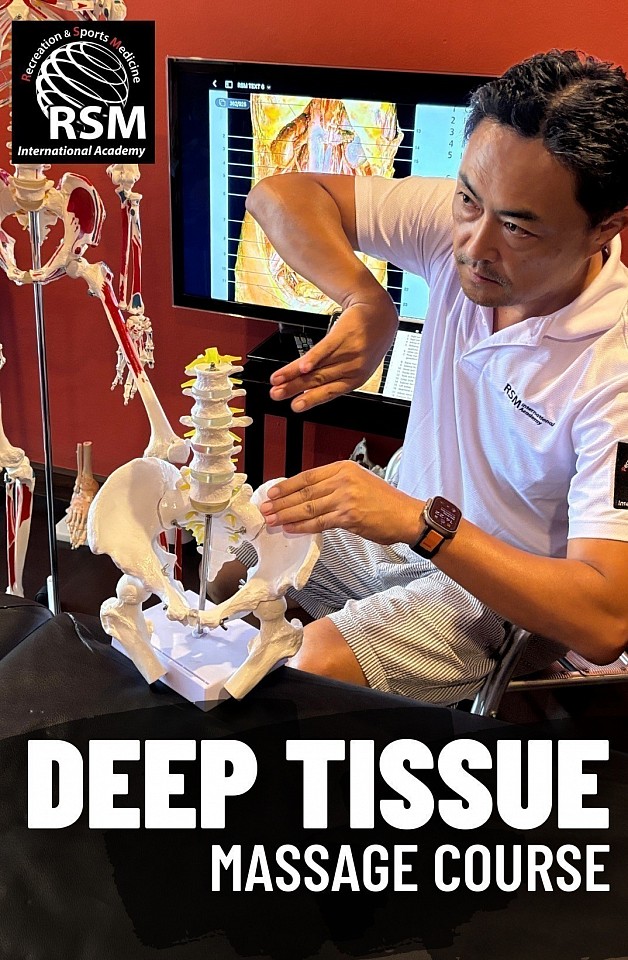
I’ll be honest: walking into a classroom filled with experienced therapists, physiotherapists, and even a national team coach was intimidating. As a complete beginner, I had just finished the Trigger Point Therapy course, but I still felt like I was just "guessing" when I touched a body. I worried that a learn deep tissue massage would be too advanced for me or that I would just be slowing everyone else down.
I couldn't have been more wrong. The way this course is structured didn't just accommodate beginners—it empowered us.
Seeing is Understanding
My biggest fear was anatomy. I thought I would be lost in Latin names and complex diagrams. But RSM uses a visual learning method that makes everything click. Over five days, we looked at hundreds of photos and illustrations. This visual approach provided the anatomy basics for massage students that I desperately needed, but in a way that made practical sense.
Instead of just memorizing a textbook, I learned to see posture. I learned to look at someone standing and spot a pelvic tilt or a rounded shoulder. Suddenly, the human body wasn't a mystery anymore; it was a map I could read.
It’s Not About Strength
Before this training, I thought "Deep Tissue" meant you had to be physically strong and push as hard as possible. I was terrified I wouldn't have the stamina.
The course completely changed my mindset. We spent hours developing effective pressure techniques that rely on body weight and gravity, not muscle power. I learned that if you sink slowly and respect the tissue, you can go incredibly deep without exhausting yourself or hurting the client. For a beginner, realizing that technique beats strength was a massive relief. It became one of the most essential tools for massage therapists starting their careers—knowing how to work smart, not just hard.
Learning the Logic
What surprised me most was how logical everything is. We didn't just learn a routine to repeat blindly. We learned the differences between massage modalities and why you would choose deep tissue techniques over others for specific structural issues.
We practiced addressing specific muscle groups like the hip rotators or the neck stabilizers, but we always knew why we were doing it. Whether we were discussing common injuries treated by deep tissue massage like sciatica or stiff necks, the instructors explained the cause and effect clearly. This stopped me from just "rubbing where it hurts" and helped me understand the source of the pain.
Building Professional Confidence
Another area where I lacked confidence was communication. I didn't know how to talk to a client professionally. The course placed a huge emphasis on establishing rapport with clients—not just being friendly, but explaining the treatment plan clearly. Learning how to explain why I was working on a specific area gave me a sense of authority I didn't think I’d have so soon.
The RSM Difference
The lead instructor, Hironori Ikeda, is incredible. Despite his massive experience in sports medicine, he never made me feel like a novice. His explanations of the kinetic chain were so clear that even I could follow along and see the patterns he was describing.
If you are a beginner looking to Deep Tissue Massage training course correctly from day one, do not waste your time with vague courses that teach "intuitive" fluff. RSM gave me a solid, scientific foundation. I walked in as a nervous student, but I walked out feeling like a legitimate clinician who understands the body.